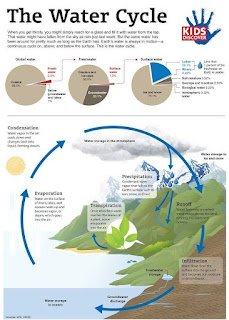

Understanding the Water Cycle: Nature’s Endless Recycling System
Introduction;
– Briefly explain the importance of water in supporting life on Earth.
– Introduce the concept of the water cycle and its significance in maintaining a continuous supply of fresh water.
I. The Water Cycle: An Overview
A. Evaporation:
– Define evaporation as the process of water turning into vapor due to heat from the sun.
– Explain that evaporation primarily occurs from oceans, lakes, rivers, and even moist soil.
B. Condensation:
– Describe condensation as the conversion of water vapor into liquid droplets.
– Discuss how condensation leads to the formation of clouds in the atmosphere.
C. Precipitation:
– Explain precipitation as the release of water from the atmosphere in the form of rain, snow, sleet, or hail.
– Discuss the role of gravity in causing precipitation and how it replenishes water bodies on Earth.
D. Surface Runoff and Infiltration:
– Explore how precipitation either flows over the land surface (surface runoff) or seeps into the ground (infiltration).
– Highlight the importance of infiltration in replenishing groundwater and sustaining vegetation.
E. Transpiration:
– Define transpiration as the process by which plants release water vapor into the atmosphere through their leaves.
– Discuss how transpiration contributes to the overall movement of water in the ecosystem.
II. Key Components and Processes of the Water Cycle
A. Oceans and Bodies of Water:
– Highlight the role of oceans as the primary source of evaporation and the largest reservoir of water on Earth.
– Explain the importance of rivers, lakes, and other bodies of water in the water cycle.
B. Atmosphere:
– Discuss how water vapor rises into the atmosphere through evaporation and contributes to cloud formation.
– Explain the significance of temperature, air pressure, and humidity in regulating water vapor in the atmosphere.
C. Cloud Formation:
– Detail the process of condensation and its role in the formation of clouds.
– Explain the different types of clouds and how they impact weather patterns.
D. Mountainous Areas and Watershed:
– Explore the influence of mountainous regions in the water cycle, including the collection and storage of precipitation.
– Discuss the concept of a watershed and its role in channeling water flow.
E. Groundwater and Aquifers:
– Explain how infiltrated water becomes groundwater, stored in porous rocks and underground reservoirs called aquifers.
– Discuss the significance of groundwater in supplying water for wells, springs, and sustaining ecosystems.
III. Human Impacts on the Water Cycle
A. Water Consumption and Management:
– Discuss the increasing demand for freshwater resources and its impact on the water cycle.
– Highlight the importance of responsible water usage, conservation, and sustainable management practices.
B. Deforestation and Land Use Changes:
– Explore how deforestation and land use changes affect the water cycle by reducing evapotranspiration and increasing runoff.
– Discuss the consequences of these changes on local and regional water availability.
C. Climate Change:
– Explain how climate change alters the water cycle through factors like altered precipitation patterns and increased evaporation.
– Discuss the potential consequences of climate change on water resources and ecosystems.
IV. Conclusion
– Summarize the key stages and processes of the water cycle.
– Emphasize the importance of understanding the water cycle for sustainable water management.
– Encourage readers to appreciate and conserve water resources to ensure their availability for future generations.
